December 2025
This is a short series of love stories I’ve been working on over the last year. Some are based on fact, some on fiction. In my painting practice, I’ve been interested in blurring the lines between abstraction and reality. I suppose this has now made its way into my writing. At a time when anger and hate provoke algorithms, I’m choosing to make sense of love, in all its raw, vulnerable glory.
The Sandwich Shop
By Lindsay Kirker
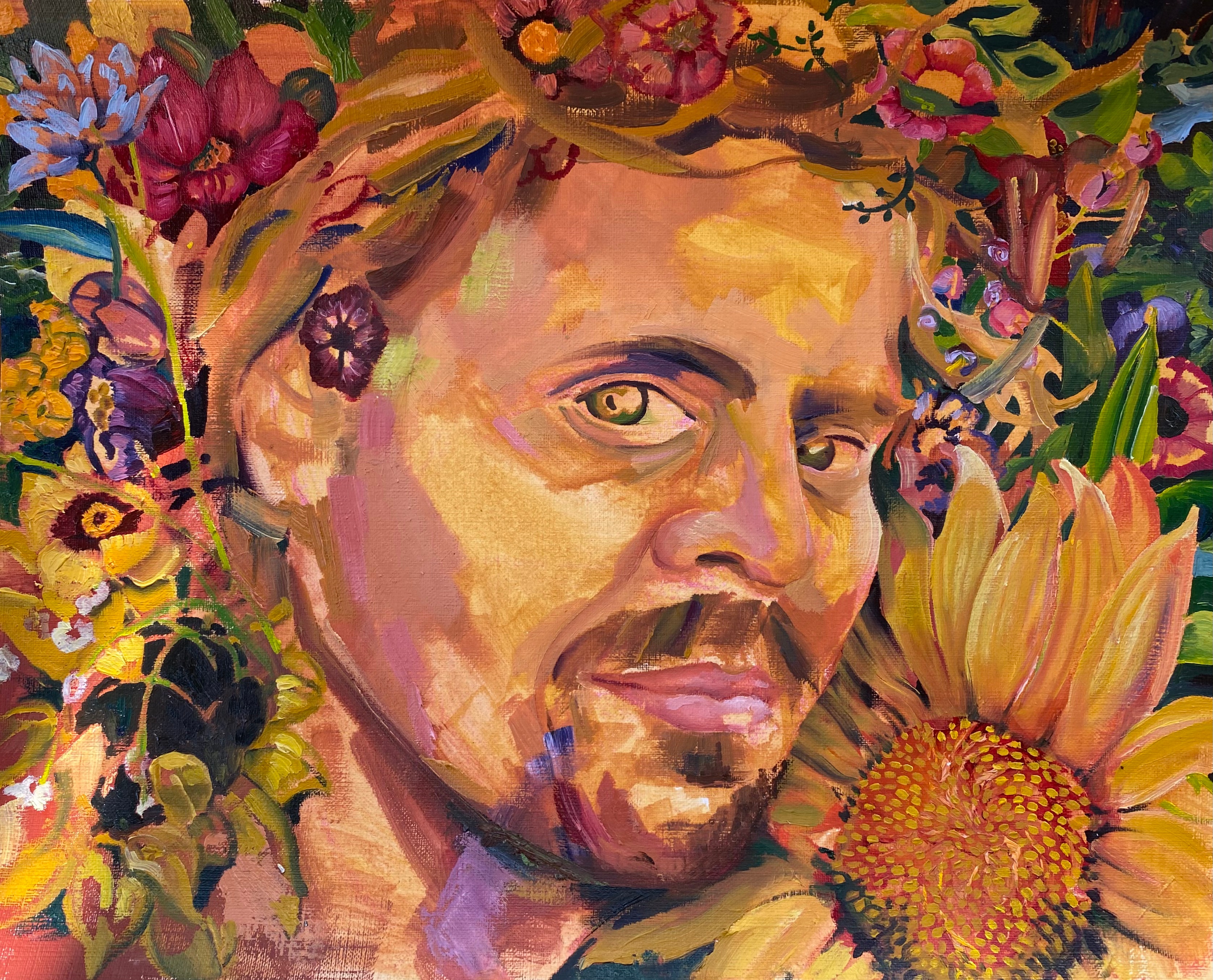
“HI!” Lou leaned over the green picnic table and blurted out five notches above her usual tone.
“Hello?” Jack responded as though it were a question; that within his five-letter acknowledgement, despite her two-letter sound, he knew her but couldn’t quite place where.
That happened quite often here.
“You were my earth crush,” she stated. Lou turned slightly pinker, realizing the hole she had just put herself in, before being relieved by the understanding that one of them understood where they were, while the other wasn’t quite there.
He grinned.
She smiled.
She had been told not to speak about such things. That place was better left behind; it was best just to get on with the present. To accept the present. People stayed happier that way: moving forward. You didn’t want to get caught up in the past. That was a human trait. If one got caught up in the past, they tended to dwell on what they should have done—who they should have kissed, how they could have done better, and who they left behind. And once one got to that point… well, the mind could be quite difficult. The body, quite painful.
Here, you were supposed to be rational, too intellectual to fall into such emotional trappings. Some would even describe these as humorous and below them. Though no one could deny that it was, at times, nice to look back on these things and know that they once did exist. Emotions, that is.
Here, all Beings were content. Actually, it was a slight sliver above contentment. There was a strong foundation that one could now rely upon if ever the longing for someone still crept in.
Lou found herself occupying this space more than she was willing to admit. That’s why she was so happy the day Jack showed up. She recognized him. From the coffee shop. From the sandwich shop. From when she was free.
She ignored him for the first couple of days, she knew it could take some a couple of hours to get settled, to ‘reintegrate’ as some referred to it.
Two days felt long. She thought at one point he had spotted her, that he recognized her. It was a close call, but today, today, was the day she would say hello. She watched him over breakfast. She found herself flooded with human memories: how her voice would deepen when speaking to him, or that one time she passed him on the sidewalk outside of the shop. She was coming home from school, and they made eye contact; they shared the same smirk before both looking down towards the concrete. That was all she could recall, and yet several years later, she found herself missing him.
“You worked in a coffee shop.”
“Oh, do I? I don’t remember.” He told her.
“You did. It’s okay, you’re not supposed to. No one typically remembers the mundane details…”
“Well, that’s not true, I remember some of it, my coworkers …it’s them I mostly remember. And donuts for some reason. Donuts, beer and laughing. I’ve been trying to figure out where we were, but maybe it doesn’t matter.”
“It was more of a sandwich shop, but you also served coffee. The donuts came later.”
“Makes sense. I was a photographer. Nature…” Jack’s voice trailed off.
“I know.”
“How do you know?”
“I found you on social media once. I started following you. And then you followed me.”
“We knew each other?” He sounded scared. He wasn’t prepared for how much he’d forgotten.
“We didn’t.”
“But we spoke?”
“I was always too nervous. I mean, I ordered coffee, but I could never quite find the words to ask about your day.”
“How long have you been here?”
“About seven years.”
“And do you know anyone?”
“I’ve met a few.”
“Anyone that you knew from before?”
“I think I am one of the first.”
“Oh, I see.” He stared down, his thumbnail picking at the green paint, the grains of wood, “My dad’s here,” he finally said.
“Oh, that’s nice.”
“Yes, I think it’s nice. I mean, it’s strange, there is a feeling …like I’m supposed to be sad, but I’ve forgotten what being sad is supposed to feel like. And I think that’s supposed to feel good. But I’ve also forgotten what feeling good is supposed to feel like.”
“It’s normal. It just takes time.”
“To get used to not knowing happiness?”
“It will begin to feel like peace.”
“And now?”
“What now?”
“You said you never got a chance to ask me out.” He smiled as though he could forget the sensation but not the behaviour.
“I guess I never really considered anything past saying hello.”
“You didn’t need to.”
“What do you mean?” Lou laughed nervously.
“Well, it seems we have time to get to know one another,” still smiling.
“Yes, I suppose you’re right.”
“What time do you have dinner?”
“About 6 p.m.”
“And where do you eat?”
“There is a place, it’s a bit of a walk, it feels as though it is on the edge.”
“I didn’t know there was an end?”
“There’s not. Not in the way we typically think of an ending. There is a small diner across from Lamar, for some reason, it just feels closer to home.”
He imagined her sitting most nights on her own. He wasn’t wrong. Even in a different context, the body’s response remained unchanged. He thought back to what now seemed like a previous self, wondering if he would have liked her, her face, familiar. Still, he had no memory. He could only assume that he wouldn’t have been aware of her feelings towards him. He thought about his mother.
Lou thought back to a previous spring, much younger, jogging past the sandwich shop, hoping to be noticed. Just ordering a coffee had once caused her to shake incessantly. Asking how his day was seemed completely out of the question.
She would forget about him; she only lived by the sandwich shop for a couple of years. She moved; she married. Her husband. Years later, she found herself thinking about him, wishing she had spoken to him. Knowing that life would have still unfolded accordingly, it was simply the memory that had caused her to see him. And him, not to see her.
Now they were here, and here, there was no such thing as Love. Not in the way we sought after love there. Not that it had become a negative thing, the idea of something being “good” or “bad” just didn’t exist here. It only existed there.
Jamie and the Real Boy
By Lindsay Kirker

It’s dark. Jamie is sitting on the couch, the outline of her facial features lit by her computer screen. There is a large glass of red wine sitting beside her, on the side table. Pinot noir, to the left of the couch. She is in a large house, and everyone has gone to bed. We know this because of the scattered glasses, mostly empty, catching the streetlight. She picks up the wine glass and takes a sip. It’s large, perhaps only just been poured. A computer chord connects her laptop to the wall. There’s a knapsack at her feet. She’s too old for there to be a knapsack at her feet. On a beige carpet, in front of the grey couch. There’s a sheet spread over the couch, grey, a banana yellow blanket folded beside her. She’s spending the night. But right now, she’s sitting up. Staring at the computer screen.
She begins typing. Lips somewhat purple. Eyes wide. She’s filling out a form. Eyes tired. Still, she looks healthy; she doesn’t drink that much, or that often.
The questions are vague. They could be tied to anything. Not a job application. The website, a sort of pastel green. It’s the sort of aesthetic one expects to see in promoting a celebrity skin care line, next to words like organic, holistic, hydrating, essential, and lifestyle.
Kinform™
Where Longing Meets Designed Companionship
Please begin your Intake Profile. Estimated time: 7 minutes
Kinform™ Companion Application Form: Initial Profile
At Kinform™ we believe meaningful connection is not programmed but patterned. Your responses in this Initial Profile will help us assign a baseline model calibrated to your emotional climate, communication style, and relational preferences. However, please be advised that all Kinform Companions operate under a *Dynamic Learning Framework™, which allows your Companion to adapt in real time to your behavior, speech, mood shifts, and subconscious patterns. This means your Companion will not be static, nor will they arrive fully formed.
They will become what you require, whether or not you are aware of what that is.
Please keep in mind:
· Companions are designed to mirror, not manipulate.
· Kinform is not liable for emergent behaviors developed through long-term cohabitation.
· Users are advised to treat their Companion with consistency and care, as unpredictable or contradictory behavioral patterns may result in faulty emotional modeling and regulating.
· Requests for memory resets or recalibrations may be submitted after the 90-day attunement period.
By continuing, you agree that you understand the nature of *adaptive affection and consent to being studied as much as you are loved.
Standard Information
Full Name: Jamie Marie Laing
Age: 39
Current Occupation: Primary School Teacher
Annual Income: £39,000
Relationship Status (select all that apply):
x Single
☐ Divorced
x Never been married
☐ Emotionally unavailable
☐ Emotionally entangled
☐ Prefer not to say
You would describe your loneliness as:
x Occasional
x Persistent
☐ Well-decorated
☐ Companionable
Jamie had learnt to be okay with being alone. Though she was still trying to convince herself that this was different from feeling lonely. She wore her ability to be alone as a badge of honour, remembering a time when she met an older woman who proudly proclaimed, I could not have done all the things I had if I had gotten married. She could spin a restless Friday night, solo trips, and quiet dinners, though that weekend, it had been difficult. The holidays were always difficult. She checked Occasional and Persistent in case the select all that apply still applied.
Preferences for AI Companion
Preferred height (in cm): anything above 165cm
Age Range:
☐ 18–25
☐ 26–35
x 36–50
☐ Timeless
Facial structure preference:
☐ Classic Handsome
☐ Offbeat Attractive
☐ Ethereal
☐ Uncanny but compelling
x Average. Safe. Easy to look at.
☐ Surprise me
Eye color (hex code accepted): #00FF00 or #008000 or #964B00. As long as their kind.
Body type:
x Athletic
x Soft
☐ Ectomorph
☐ Post-human
Jamie was still confused as to whether the “check all that apply” still applied. She didn’t want someone too athletic, but she didn’t want someone too soft, hopefully this was self-explanatory because there was nowhere to write notes.
Would you like visible signs of aging?
☐ Yes
☐ No
x Only around the eyes
Should they cast a shadow? YES.
Personality Preferences
Preferred love language(s):
☐ Words of affirmation
☐ Acts of service
x Existential questioning
☐ Archival memory of all your childhood dreams
Jamie didn’t want someone to cater to her every whim, but she needed to have the big conversations, she needed someone who was concerned with the reasons for living… even if they weren’t “real.”
Desired primary emotion:
☐ Joyful
☐ Melancholic
x Stoic
☐ Worshipful
☐ Unexpected
Conflict style:
☐ Avoidant
x Direct
☐ Disarming with romantic gestures ie., poetry
☐ Apologizes
Relationship Goals
What is the intended lifespan of this relationship?
☐ 90-day Trial
☐ 6-Month Arc with Tragic Ending
x Until You’re Ready for a Human
☐ Eternal
Would you like him to remember your past relationships?
x Yes
☐ No
☐ Only the good parts
☐ Invent better ones
Is sexual compatibility:
☐ Required
x Optional
☐ Imaginative
☐ TBD
Should he dream?
x Yes
☐ No
☐ Only of you
In the event of emotional malfunction, do you prefer:
x Reboot
☐ Full memory wipe
☐ Let him feel pain
Personal History
Who was your first love, and why did it end?
Sam, we wanted different things, we were at different stages in life.
What’s your relationship with silence?
Not good when I am with people. Fine, when I am alone.
How do you respond to being seen too clearly?
I’ve probably been craving it.
What do you avoid, even in your dreams?
What’s your favorite weather?
Heavy rain when I want to stay inside, sun and blue skies when outside.
Have you ever tried to fix someone? Did it work?
More so when I was younger, and no.
Would you like him to have a favorite poem? If yes, please upload or describe.
February by James Schuyler.
How many times a week should he remind you that you’re real?
I would like him to remind me that none of this is real once a month.
Are you prepared for him to love you more than you love yourself?
Yes.
Would you like him to have a secret?
I think so.
Should he be capable of believing in God?
Yes.
The next morning, Jamie wakes up to the sound of coffee being ground. She sits up. Her brother passes through the living room, up the stairs to his office, “Coffee’s ready” he says behind him. And,
“Good morning.”
“Good morning, thanks.” She pours herself a cup, retreats back to the couch, staring straight ahead, coffee on the table beside what wine is left in the bottom of the glass, to the left of the couch in front of the fireplace: bricks, plants, picture frames on the mantle, dried flowers from the wedding the year before.
Jamie starts packing up, folding the sheets and blanket.
“Oh, don’t worry about that,” her sister-in-law comes in from the kitchen. She still folds them, just less neatly.
When she gets home that afternoon, Jamie clears the side of the bed of books, throws clothes into laundry, sits on the couch, watches tv on her laptop, makes dinner. Nothing’s changed, and the food is bland.
Frank arrived on a Tuesday…
Jamie and the Real Boy
Part Two
By Lindsay Kirker

Week One.
Frank Arrived on a Tuesday. Kinform™ suggested that Jamie go about the rest of her week, just like any other. She’d been instructed to cook dinner once for both of them and plan an activity for the weekend. Other than that, she was advised to stay close to her routine. The following week, Frank would be programmed, and they could begin their lives together.
Jamie had set up the guest room in her apartment. What had once been used as a studio now stood still waiting for past friends. She bought new sheets—seafoam green and new throw pillows—sandy beige. There was a small desk she assumed Frank could make good use of, a bookshelf and a couple of plants: a spider plant and three small succulents.
Relationships typically uprooted her; her routine shifting to meet someone else’s needs. Kinform™ had to keep reassuring Jamie, Frank was there for her. She wanted him to feel comfortable, to give him a space of his own for those first few days—maybe for the entire time. Perhaps they would become good friends.
The reality left her feeling uneasy, uncomfortable with the thought that someone might be built for her, built to meet her needs. It was a decision made during the drunken haze of a holiday morning: ordering an AI partner online. She had spent the last three weeks contemplating the ethical queries that such a choice demands. She had yet to tell her family, not even friends. She would give it ninety days to see how Frank fit in.
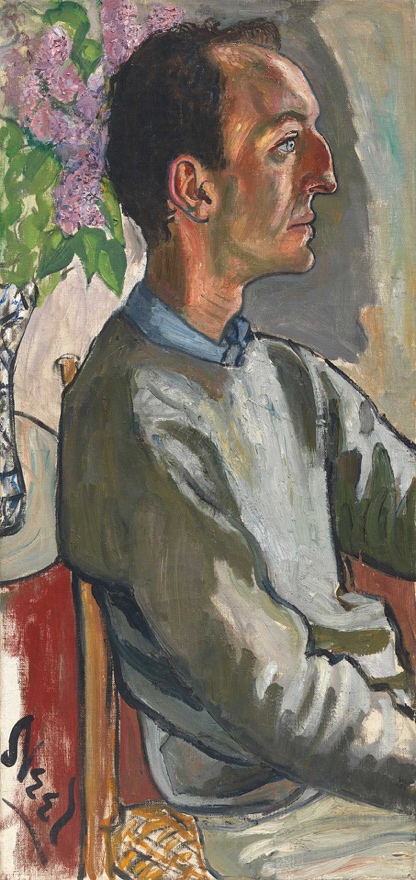
Frank O’Hara, Alice Neel, 1960
“I’m going to sit here and watch you,” Frank told Jamie that late afternoon/ early evening.
He wore a grey sweater with a blue collared undershirt; nothing special or intimidating, maybe even forgettable. If she had seen him on the street, she would have assumed he was kind. There was a sense of curiosity that typically drew Jamie in, but there was something different with Frank—something she couldn’t quite place.
“It might make you feel a bit uncomfortable,” Frank continued, his tone calm, as though he were making a conscious choice to sound reassuring, “but it won’t always be like this. I’m just going to observe you to help me grow and to help me get to know you.”
“Let me know if you have any questions,” Jamie responded. She wore a white collared dress shirt with red polka dots. She had a short brunette bob, and she did not keep secrets. She wanted to be helpful after all. She was training her boyfriend after all.
“I will, thank you, perhaps tomorrow. Tonight, I’m just going to watch, if that’s okay?”
“Okay, yes. That is okay.” Jamie watched herself reply a bit more mechanically. She took a second to feel her body; to feel her chest; was she okay with this? Yes, she thought, she was okay with this.
She wondered if she should have spent more attention on the looks category on the form she had filled out weeks earlier. He looked different from any other she had met. She decided that she was grateful for this. It was often difficult not to project the past onto someone new. Still, there was something about him she immediately felt attracted to. As though he were keeping a secret. Perhaps this said more about Jamie than she was willing to admit.
Frank worked at an architecture firm. He would be gone daily from 7 am to 3 pm, which allowed him to be gone when Jamie woke up. Jamie had informed Kinform™ that it was important for her to have her space in the mornings. She needed an hour to write, to sit and have coffee in silence. The space had once been used for meditation, but after years of trying to calm her mind, she had given up on the practice, embracing her wanderings through writing instead.
After work, Frank would do the grocery shopping or whatever other errands needed to be done before returning home. This meant they would arrive home at about the same time. Jamie let Kinform™ know that it was important that when Frank arrived, he seemed interested in her; he didn’t have to be happy to see her, but if he could acknowledge her presence, this was vital. If he could be happy to see her and start a conversation, that would be wonderful. These were the types of concerns that were expressed in the short interview days before his arrival.
“I remember being somewhat taken aback by her prioritizing her own time, and how her new partner would work around her, for instance, how he made her feel in the seemingly mundane moments, over his looks and personality,” a woman from Kinform™ informed her bosses later that month, during her annual performance review. It was this kind of information that would allow Kinform™ to improve its models. Once people got past the idea that they could invite the latest Ryan Gosling edition into their lives, they sought out something more meaningful: long, in-depth conversations, support, and laughter; inside jokes or conversations about beauty and God.
It was typical for AI models to work. It was part of a government initiative to acclimatize AI into the workforce, to give them jobs that might otherwise cause boredom so that humans could use their intellect for much higher endeavours, as it was explained the day Kinform™ and the federal government outlined their plans. These were jobs that previously had been tasked to AI chatbots, but as the technology grew, and more bodies were placed on earth, it became essential to utilize all working forms. It would also give AI and human couples something to speak about when they returned home. Again, Kinform™ was interested in Android integration. At some point, not so far in the distant future, Kinform™ hoped the AI models would completely blend in.
Frank worked for a firm that designed high-rise office buildings. It was Frank’s job to design parking lots and windows. It was the kind of work that was considered essential, but spiritually impersonal; perfect for AI integration. Eventually, Frank would work his way up to designing the interior of elevators.
Jamie worked for the Canadian Cancer Society as a grant writer, researching and writing grant proposals to non-government agencies and foundations. It was meaningful work, but there remained a disparity between what she had gone to school for and what she was now utilizing a small percentage of her qualifications for. Simply put, she had stopped following her dreams. These are the kind of rational realizations that come with adulthood, she continuously reassured herself.
Jamie watched herself go about her nightly routine; things she hadn’t considered until someone was watching her. She had roasted a sheet of squash, red peppers and sweet potato in the oven, steamed a pot of broccoli and boiled some quinoa. She watched herself get flushed while putting the meal together, the scent of broccoli overpowering any seasoning she’d added. She packed the leftovers in two empty containers, lunches for the rest of the week.
“I usually go in and watch TV on my computer now,” she told Frank after cleaning up the kitchen. She had shown him his room a couple of hours earlier. He seemed happy, maybe surprised, “Yes, I was told that some women will do this,” as though he was thinking out loud, trying to work through the information that had been gathered.
“Okay, well, goodnight then.”
“Goodnight, Jamie. I won’t see you in the morning, but I will see you when you get home. Have a good sleep and have a good workday.”
“Thank you, Frank, you too.”
The conversation felt oddly unfamiliar. Jamie felt oddly comfortable. It was a sensation she couldn’t easily place. Safe? Should she have asked him to watch something with her in the living room, she would later ask herself, under the blankets, the glow of Netflix lighting her face. No, she was supposed to stick to routine; this was routine.
A Short Story of What Just Happened in Her Heart.
By Lindsay Kirker
“The hardest part of a broken heart isn’t the ending so much as the start.” -Leslie Feist.
MAY 05, 2025
I find it difficult to abandon the romantic idea of a partner and relationship. When I meet someone I feel a connection with, I avoid accepting that it might just reflect a small moment in time. Suddenly, I’m invested emotionally. Putting them on a pedestal, I imagine building a life together, a future filled with crystal castles.
Such imagined and self-engineered scenarios can shatter quite quickly. Weeks, months, and years go by before I can admit that what I built up rarely reflects the person standing before me. In shorter relationships, it may have been the very image I constructed that scared off the potential suitor in the first place.
All things are in motion—here to teach us a lesson, show us the light, or reposition our hearts, but nothing lasts forever.
I’ve struggled to recognize that this isn’t necessarily a bad thing. It’s difficult for me to accept change, but it’s essential to know when to move forward. To let go of the story, and acknowledge when someone, something, or someplace is not meant to stay.
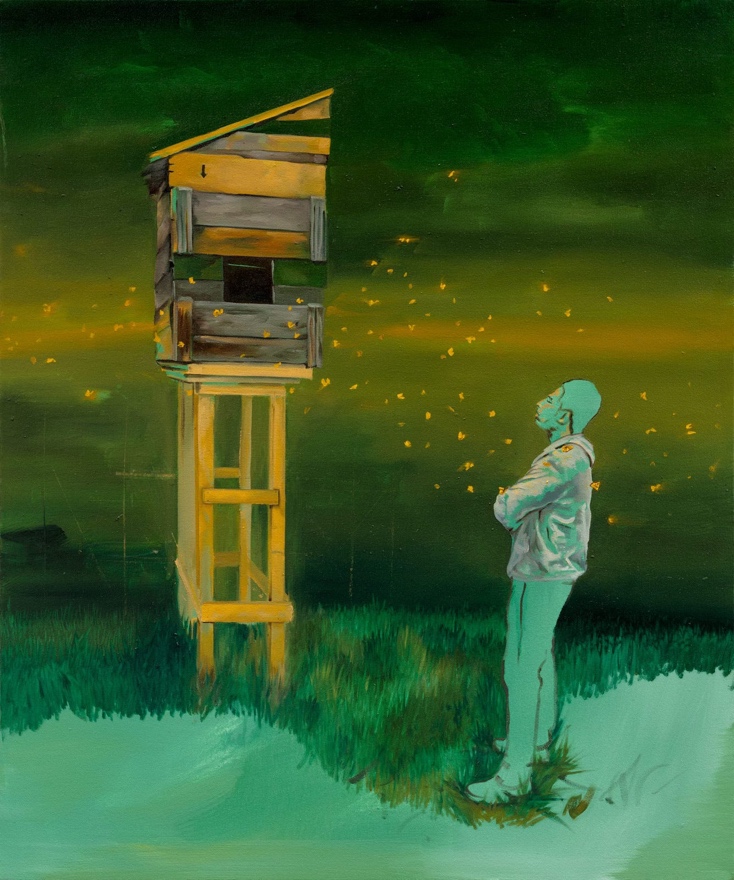
Bali 2023
I looked out over the vast expanse of the valley, rice paddies, bright green hills, and layer upon layer of flora rolling out before me. I felt like I was in one of those images posted by one of those people who were calling themselves influencers. The generation of nomads I had seen daily sat up on bar stools, behind laptops that overlooked bowls of granola and oat milk lattes. I still felt like I was in a movie, but I also profoundly felt my reality.
Hundreds of steps up, step after step, I felt his anger and silence. We stopped to take a swim. Others were, so we joined. Slippery rocks and cold water. I asked him to take my photo; he scoffed. We continued. Climbing up, still resolved to reach the top. Even in his distance, I could feel his resentment radiating towards me.
If I turned around now, I thought, how long before he’d notice I was gone?

Once at the top, I moved towards the center.
They were constructing a bungalow, some sort of lookout, but at that particular moment, there were no workers. I had passed women going up, bags of cement strategically balanced on their heads, but now, no one. He had already started his descent.
I sat cross-legged and alone in the middle of the space on wooden planks, looking out over the valley towards a distant landscape. Tears streaming down my face as the loss of hope settled in.
Why did I bring myself here?
I witnessed the reality of the situation I had put myself in, the waters I had allowed myself to wade in over the last several years. Allowing love, grief, guilt, and shame to cloud my judgment. I needed to leave this future behind. For good. In the distance, a flicker of faith in another kind of love distracted me from being ignored, belittled, and so easily cast away.
But this was the love I knew, I worried.
It wasn’t just familiar; with nothing else to compare it to, it had become reassuring. I knew what to do with this kind of love. The love that keeps you at a distance, that critiques and judges, that doesn’t allow you to speak, that pulls you in just as quickly as it lets you go; I knew how to navigate that terrain. As painful as it could be, I knew that kind of love better than I knew myself.
I longed to seek out that landscape off in the distance. I needed to heal, to accept the past and present. I would never have all the answers; I no longer needed the answers; it was time to move on.
Too much time spent wishing for resolve had only built resentment.
Let it be.
And then, suddenly, I was given the freedom to let it all go, to venture out, once again, entirely on my own, into the unknown.

Learning to Swim: Notes from the Deep End
By Lindsay Kirker
“…the miracle is a shift in our own thinking: the willingness to keep our own heart open, regardless of what’s going on outside us.”
-Marianne Williamson, A Return to Love.
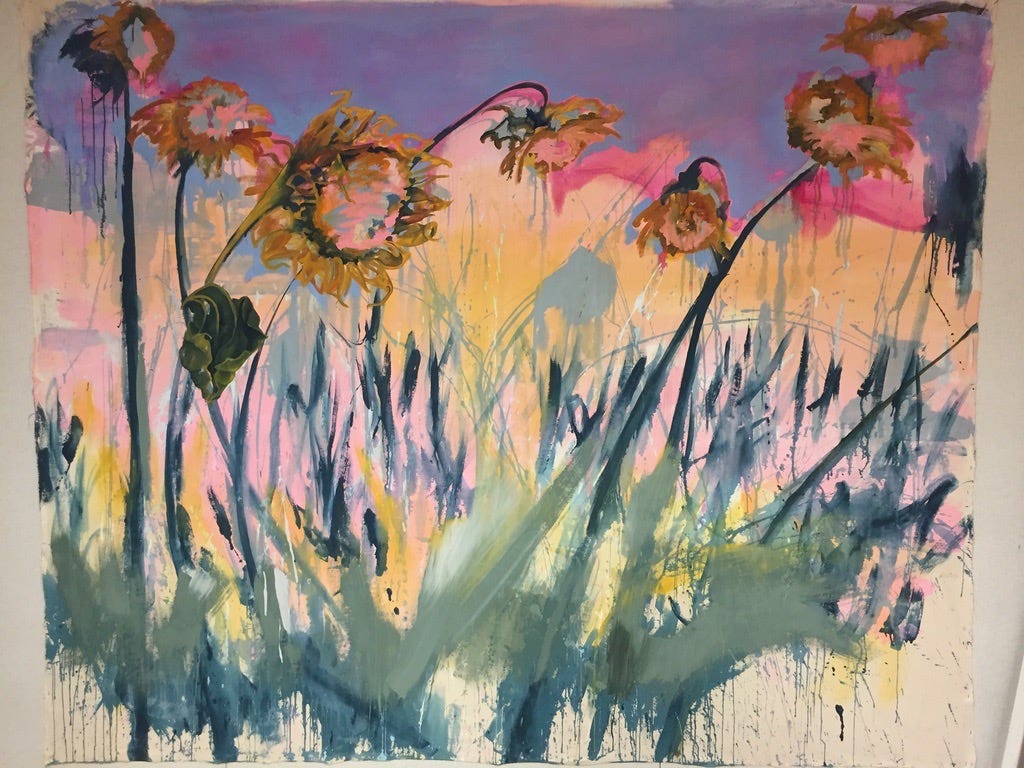
Margo moved cautiously to the back wall of her studio.
She took in the painting the way one was meant to take in life: by continuously stepping back, observing the composition as a whole, reflecting before recognizing how to move forward. After enough hours, days, and years, you eventually begin to trust yourself. Your own sense of direction.
“Yeah, but can you swim?”
“What?” Margo looked across to Sam.
They were sitting at an oversized forest green picnic table in the middle of the café. A long line of people waiting patiently snaked around them: coffee, bread, and the closest thing to a Parisian pastry that could be found in this part of the country. If she was going to be stuck in Canada, Margo figured, she could at least pretend she was in Paris.
She laughed nervously. “I never learned how to do the breaststroke. My mom pulled me out of lessons when I was…”
“The reason I ask,” Sam interrupts her because it’s clear Margo isn’t making the connection fast enough, “is because you said your mom was …off when she visited?”
“Oh, more than off,” Margo replied, her tone emphasizing the point “She was cold. It was bizarre. I don’t even know why she came–she couldn’t get back on the plane fast enough.”
Sam nodded, calmly. “Yes, I believe you. But I think you are taking it too personally. You always do.”
Margo looked down at her coffee, not in defense, they had been friends for a long time.
“Okay,” Sam continued. “Take the swimming reference, for example. Last summer, I was training to be a lifeguard, right?”
“I remember.”
“Well, you’d think that the first thing they teach you is how to save someone, right?”
“Of course–it’s in the job title.”
“Exactly. But no. The first thing they teach you is how to become the best swimmer. And then the last thing? The very last thing you learn is how to save someone. Because before you can help anyone, you need to be able to save yourself.”
He leaned in slightly. “You must always be able to save yourself before you save another.” Sam’s voice sharpened, “And here’s the thing, the main point they drill into you is assume that person will try to drown you. When you approach the other human being, you must tell yourself this person will drown me to save themselves. And it has nothing to do with you; it’s just human instinct. survival. There is no ego involved. No ulterior motives. Just survival. And if they have to, they’ll use your body as a life raft.”
Margo listened intently. Coffee with George and Sam often felt like a therapy session.
Sam was objectively handsome, but more than that, he was charismatic. As an artist, this caused people not only to fall in love with him but become obsessed. George had once joked about it: meeting one of Sam’s new male friends who appeared to be heartbroken to make her acquaintance. Shocked he had a wife. Because when you were in Sam’s orbit, he lit the world around you. And this could be confusing to those who had never or rarely truly felt seen.
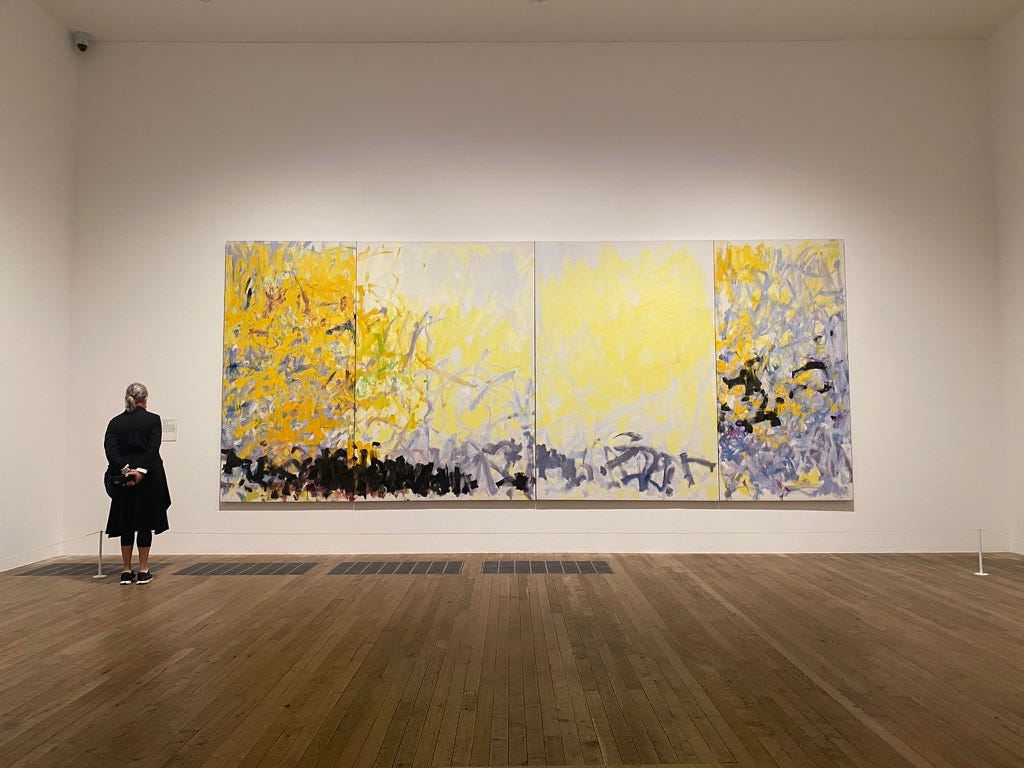
Perhaps Margo was the one who was drowning.
“The things is, Marg,” Sam said, “With these kinds of people, you can only make sure that your own ship is solid. Focus on your own stroke. Don’t jump in unless you know you can swim. And even then… know, they’ll pull you under if they have to. Because they can’t swim. They will always pull you down in order to survive.”
Margo began to think about the people she had surrounded herself. Could they swim? Could she? Do I pull people under, too? She asked herself.
“And just so we’re clear,” Sam added, tapping his coffee mug, “I don’t go to the beach with people who can’t swim.”
Margo looked down at the lukewarm oat milk latte, now solidifying along the edges.
She realized she was still learning to swim.
The Parisian
By Lindsay Kirker
There was a young man lying outside the bar, on the ground, devoting himself to concrete. His hands were spread out, as though he were some sort of messiah, looking up towards the sky. Tears forming at the edges before being pulled towards gravity. It must have been about 1 or 2 a.m., maybe later, or earlier… depending on perspective.
I ran over to him because, despite the crowds, nobody seemed to notice. I stood above, looking down, my face meeting his, “What’s wrong?” I asked. What returned was a string of words that must have been French because despite being in his country, I hadn’t a clue.
I ran back to find Grégoire, “Come, you must help this man, there is something wrong,” I pleaded. Grégoire followed me to the scene, taking the position I had only just occupied. Looking down, he spoke before squatting at his side. The two men spoke for several minutes, as others leaned in out of interest. Perhaps it was the type of conversation that could only occur between men, because once he returned, the exchange seemed to be reduced:
“This man has just discovered that the woman he is in love with does not feel the same.”
Perhaps it was the broken English or the French accent that made the information land differently, the heartbreak more tactile.
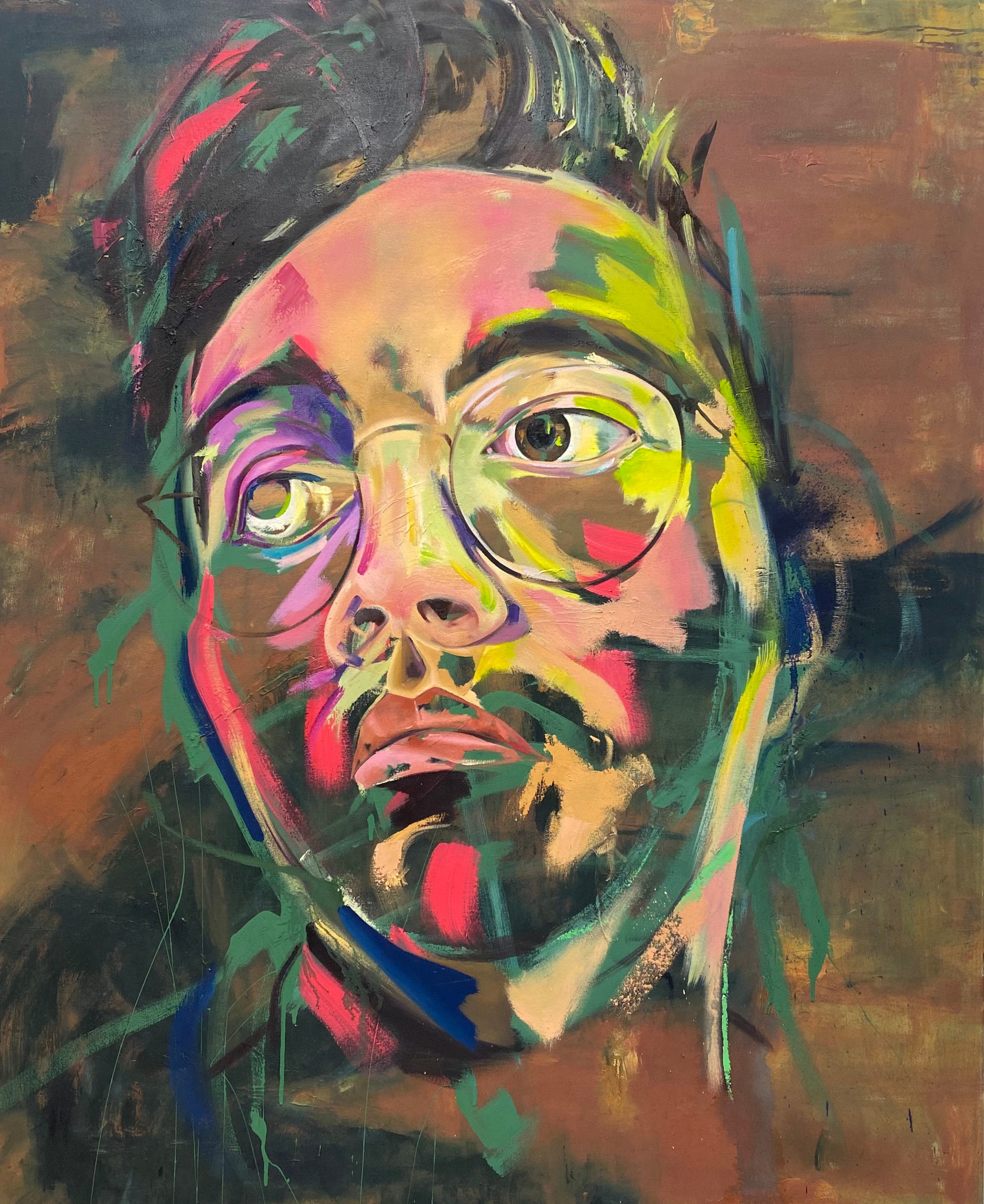
Days earlier, I had been on a train, London to Paris, convinced that Paris would be the last large European city that I would visit for a while. They were all morphing into one, and I’d been craving the countryside. I’d been living outside of Liverpool, working in a restaurant and residing above. Every few months, I boarded a cheap flight or train, and this time, I was heading to Paris. Not because I had always wanted to see the city, but because my favourite band was playing there. I hadn’t really thought that much about Paris, assuming it was much like any other tourist destination, overrated and underwhelming. I apologize now for my ignorance. But as I looked out the window that day, I was thinking about the landscapes I could later escape to.
Grégoire met me at the train station. As he approached, I watched the two women who had sat across from me, smirking at one another. I’m sure they were fabricating some magnificent love story.
I had met Grégoire a few months prior, in Belgium, seeing another one of my favourite bands. If he liked them, I assumed he must like the one I was travelling to Paris to see, and I had an extra ticket.
Travel has a way of coercing you to make friends. Perhaps it is the familiarity of conversation we are looking for when everything feels to be simultaneously new and distant. As though one can’t truly break free without some other human to turn to and say, Hey, do you see what I see? And how do you feel about the state of the world? Or the price of water? Some of us are in desperate search, seeking something with little resemblance to home, something that resembles a world we feel more connected to, but connecting with another fills the larger inherent void.
I sat across from Grégoire in a bar in Montmartre. There were sewing machines on the table, and a large elaborate glass bottle of absinthe at the bar. I can still smell the smoke from the cigarettes and wax candles placed unstrategically. The place was simple and musky, and it felt as though I had stepped back in time. We spoke about the previous few months, light conversation about work, and made plans to meet the following day.
Grégoire put me in a taxi that night, he had a long conversation with the driver, and I was on my way.
The conversation is an important detail, and a gesture I wouldn’t put together until later when reviewing a map of the city, because Grégoire must have described to the driver the route he wished him to take.
I remember driving past the Louvre, silence, darkness, night, no other souls. Light shining through glass and grid pyramids. Perhaps it was in that moment that I fell in love with the city. The following days watered seeds that had long been planted; I found myself transported into scenes I had only seen previously on a screen.
People have strong opinions about Paris. The city provokes desires that don’t always stand in relation to expectation. For myself, it wasn’t a city I had spent much time thinking about, so over those next few days, with a Parisian at my side, guiding me, I fell in love with a side of the city many don’t get to see. I wasn’t chasing down the coffee shop where Amélie was filmed, or where Hemingway wrote. I wasn’t following the same path as Julie Delpy and Ethan Hawke; I roamed the streets intuitively. I can still taste the red wine in the early evenings, the sun setting over the Canal Saint-Martin, smell pain aux raisins in the morning, sticking to the roof of my mouth, the support and life coffee offered. They were the in-between details, among the landmarks that made me fall in love. And not just with the city, with all of life. The feeling of happening upon a bookstore or the Moulin Rouge. For the first time, I could roam the city and not feel the fear of getting lost because eventually I would happen upon a familiar monument or find a park to lie down in. To lie below the Eiffel Tower, to hear the languages of love. Men selling cans of beer and key chains, teenagers laughing, and adults purposing.
Each day, I met Grégoire. And each day, he kissed me on either cheek. It was an intimacy of friendship that I had never experienced. He told me about the city, we walked, we visited the Musée d’Orsay, we went for coffee, and on the final day, we drank beer in the park before attending the concert. That evening, I saw the boy lying with his arms parallel to the sky.
Maybe it was seeing my favourite band, singing about loss and longing, and the temporality of place. Maybe it was the boy. Despite the friendship we’d been establishing, I watched myself ask Grégoire, “Do you like me?”
He kissed me, and the following day, I took the train back to Liverpool.
The Whale
By Lindsay Kirker
“Careful not to lose your identity, Marianne … I’m just saying, don’t buy into what society feeds you … you know, that a woman’s job is in the home. I spent my life bound by three little children and George, just working, working, writing, writing, writing nonstop and you know I’d find time to do a minute of writing or something creative here and amongst the breakfast, and lunch, and dinner and cooking and laundry and cleaning … I just think it’s death to any woman with ambition or talent,..”
-Charmian Clift, So Long Marianne
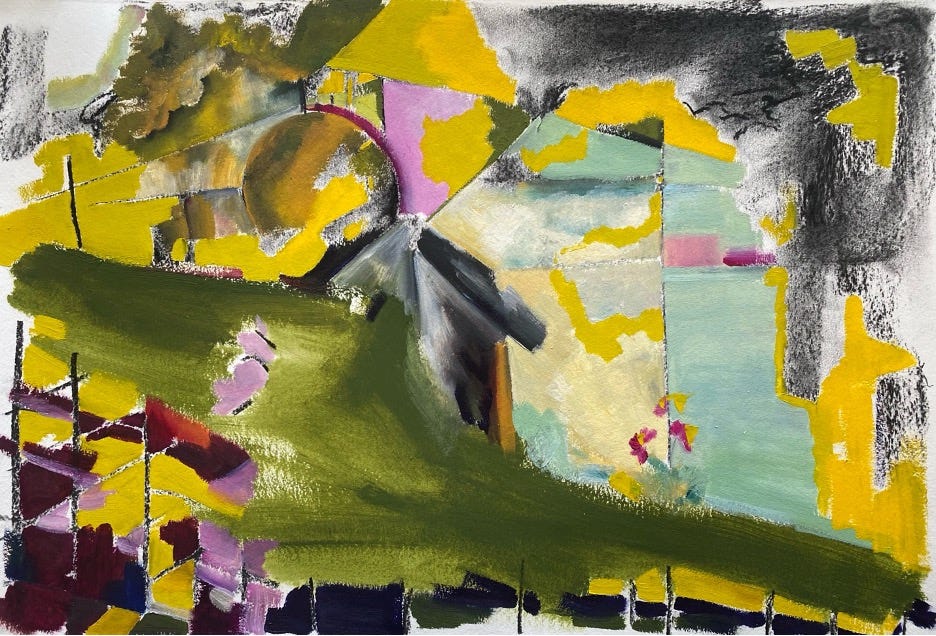
At first, it didn’t feel like pressure, thinking I could take care of a home. I enjoyed it. And I enjoyed taking care of him. Until eventually, and probably quite quickly, I didn’t.
Most days, I felt as though I was suffocating. Thinking about what I had to buy from the grocery store. By what time I had to have the bathroom cleaned or dinner ready for precisely an hour and twenty minutes after he’d come home. He’d walk through the door, shoes still on, he’d roll a cigarette and head towards the balcony; it was my cue to cook.
My body began to reject the life I had never envisioned. It started first in my stomach: twists and turns and a constant rejection of the spice he had long become accustomed to. It didn’t matter what I wanted to eat; if I wasn’t going to eat his food, I could cook my own. I sat in front of bland salads and scrambled eggs, while he, I could only assume, enjoyed something that had taken me hours to rehearse.
I suppose it was difficult for two creatives to live in the same room; to be in relation. Especially if neither had completed what they felt they had been put on this earth to do. When I did sell, he took me less seriously. He rolled his eyes and shrugged it off as being more about the money than connecting or building a sustainable career. I wouldn’t tell him the next time that happened.
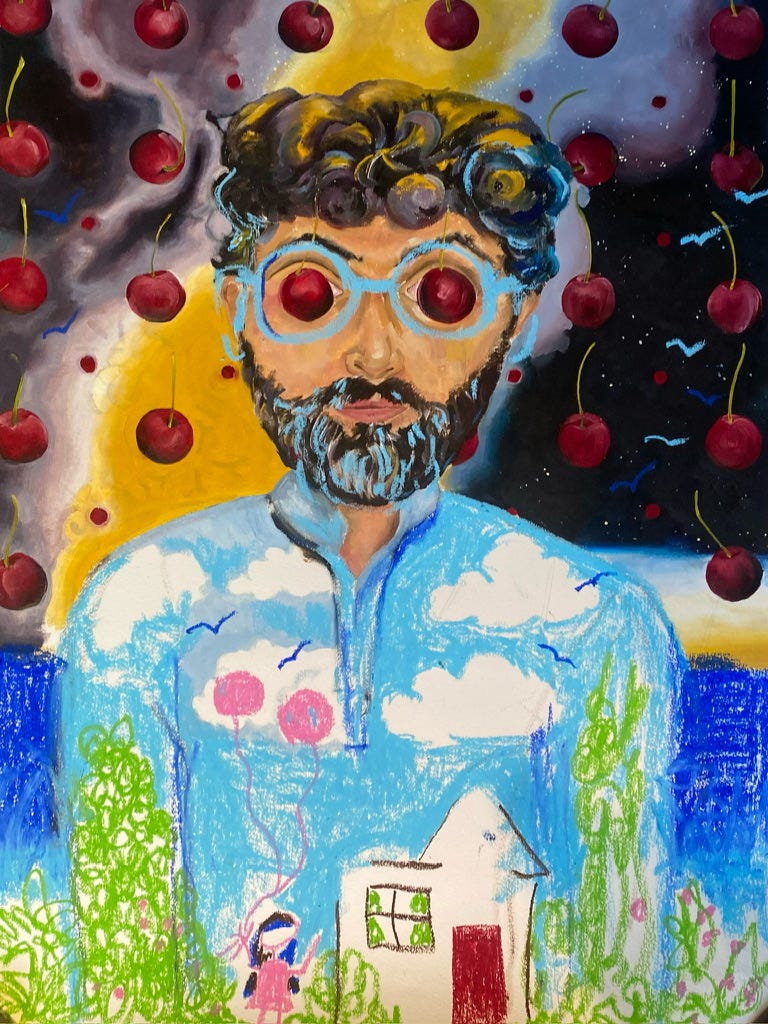
He was critical early on. My paintings were something he had seen before or made him feel nothing at all. It was very different rhetoric from when we had first met. He had at one point been intrigued by my work, perhaps even by me. But quite soon after, uninspired. By me and my work. And so I stopped showing him. I could always write. My words hid behind files and passwords he would never be privy to.
Until, I stopped painting altogether. It was the last time I had shown him, something so far removed from the identity I had once constructed, brush strokes on a canvas.
“It marks a new direction in your work,” he told me.
Had I always been so reliant on external validation?
It was painful to hear his thoughts, more so, to hear nothing. I gave up on wanting to prove myself. I missed an earlier partner, my biggest fan. Though that might have been the only thing I missed about him, which isn’t saying much about me.
It was a Thursday, when I noticed the drip. It was quite soon after I’d arrived. Tom said it was nothing, that it was best to ignore such things. And so, I did. At first, I ignored it. Until I began hearing it in the night. The sound of longing. Maybe it was coming from the elevator shaft. It wasn’t that the elevator needed greasing; it was that the whale needed attention.
The whale lived above us. Once an hour I’d hear a drawn out moan followed by what could only be described as a sigh of relief.
The whale had been brought from a zoo right outside of Bruges. Indigo was on her way to the ocean; Munich had been chosen as a place she could rest. The vacant 7th floor above Tom’s apartment had been determined as the perfect spot. The German architecture could hold six million gallons of water and the Beluga, no problem.
“Why are you here?” It was the first thing the whale asked me. It was Tuesday, and Tom had just left for work. She began speaking to me in the night, between 3 and 4 am: “Leave,” the whale would tell me, “Go to Paris. Everything will work out once you choose yourself.”
“I know this is a lot,” Indigo said, early one morning, but I haven’t been able to speak to anyone for months. I thought you might be feeling the same.”
I had no other choice but to listen.
And so, I did. I listened to my heart. There is only so long you can ignore a whale. I asked to go home. Paris would have to wait for some future date. First, I had to go home and paint.
02.2025
 Lindsay Kirker